Blog

  • We Were All Young Once

    When I first stepped into the classroom, I had no idea how much I didn’t know. Those first few years were rough. I was figuring out lesson plans on the fly, wrestling with classroom management, and trying to project confidence I didn’t always feel. But somewhere along the way—after a lot of trial, error, and reflection—I realized I had lucked into the work I was meant to do.

    Next to being a dad, teaching is the most rewarding thing I’ve ever done. Over the years I’ve been fortunate enough to teach several different subjects, and each change has added something new to my skill set. Every stage has taught me lessons that have shaped the teacher I am today.

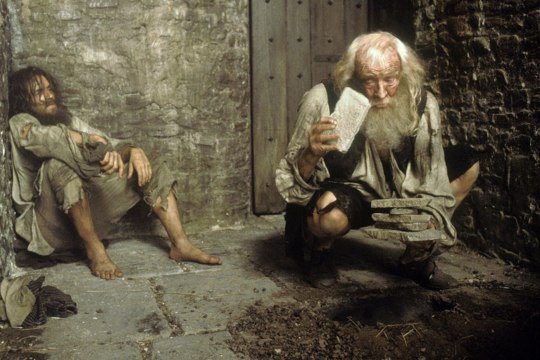
    When I taught English, my favorite novel that I taught was The Count of Monte Cristo. Edmond Dantès meets the Abbé Faria in the darkness of prison, expecting perhaps a rescuer or a savior. What he finds instead is something far more valuable — a mentor who does not hand him answers, but sharpens his mind and spirit until he can discover them himself. I’ve come to see my role with students in much the same way. My job isn’t to script their futures or dictate their choices. It’s to challenge them, open doors of possibility, and give them the tools to think, adapt, and persevere. Like Faria with Dantès, I try to plant the seeds and trust my students to decide what they will grow.
    Now, I split my time between CBI (Career Based Intervention) and Culinary Arts. My CBI students are impossible to pin down as a group—they’re individuals first. They’re with me for different reasons, but most share one thing in common: hopes, dreams, and needs that school hasn’t fully helped them reach. My job is to get them to graduation with the understanding that lifelong learning—the kind valued in the “real world”—isn’t the same thing as school learning.

    My Culinary Arts students signed up for an elective that might look like an easy A or B. But I want more for them than a grade. I want them to learn how to plan, shop for, and prepare meals for themselves. I want them to see that they can feed themselves without relying on empty-calorie fast food and late-night DoorDash runs. And I hope they’ll leave my class having tried new flavors, new recipes, and discovered they’re capable of making good, nutritious, affordable meals.

    Inevitably, when people hear I teach high school, they start in with the “kids today” speeches—how they’re lazy, entitled, addicted to their phones. I smile and think about being a kid myself. I was a huge Beatles fan, and I used to watch those grainy black-and-white scenes of teenagers screaming and fainting in the 1960s while their parents and grandparents shook their heads in disbelief.

    I even remember my own grandfather—decades after the Beatles’ Ed Sullivan debut—telling me their success wasn’t about the music. He insisted it was the hair.

    Here’s the truth: kids today are no different than kids have ever been.

    They’ve got new tools, new distractions, and yes, new challenges. But the core hasn’t changed. They’re just as smart, energetic, curious, rebellious, independent, idealistic, impulsive, resilient, social, and emotional as ever. Technology may shape their world, but it doesn’t change their hearts.

    As a teacher, I’ve been lucky to work with great kids year after year. Some come and go. Others make a more lasting impact. I remember one who emailed me after a semester at Ohio State. He had gone to major in one of the sciences, but quickly realized that it was not for him. He asked me if he should change to English. I told him that I could not be sure, but that if he kept looking and stayed open to new experiences, he would find his way. Today, he is an incredibly successful entrepreneur and businessman.

    My students keep me learning, they keep me laughing, and they keep me coming back for more. And with a new school year starting, I’m reminded of something simple: the more things change, the more teenagers stay exactly the same—and that’s exactly why I love this job.

  • Song of the Day #3

    “That Time Again” by Charles Wesley Godwin

    When I was on vacation recently, I texted my son that I was day drinking and told him the name of the bar. A few minutes later, “That Time Again” came blaring from the jukebox. My son had logged in from a couple states away and sent me the song he knew would fit my mood — and my day.

    Charles Wesley Godwin once dreamed of playing football at West Virginia University. It made sense. He grew up in Morgantown, WV, home of the Mountaineers, and played tight end and linebacker for Morgantown High School, graduating in 2010.

    He tried to walk on at WVU but didn’t make the cut. While traveling abroad, a friend brought his guitar to a club in Estonia and encouraged him to get on stage. He performed John Denver’s “Take Me Home, Country Roads” and earned an invitation to return the next night.

    That impromptu performance lit a spark. Over the next few years, he learned guitar and honed his songwriting. In 2019, he released his debut album, Seneca — undoubtedly a country record, but “more than anything it is a songwriters record.”

    I’ve been lucky enough to see CWG with his longtime band, The Allegheny High, twice this year. Both shows were barn-burning parties. The band is tight, talented, and clearly having a blast.


    Why do I love “That Time Again”?

    It feels like CWG is introducing himself.

    First you’re hearing of me, I’m hearing of you
    Hey, nice to meet y’all and how do you do?

    Charles Wesley Godwin – “That Time Again”

    For many listeners, the album Family Ties may have been their introduction to CWG. His sincerity and earnestness are hard to deny. In the second verse, he sings about how badly he wants to entertain people — and what happens if he doesn’t: “In no time at all, I’ll be checking wanted ads.”

    I love the tone of the acoustic guitar in the intro; you can almost see his fingers striking the strings. The chord progression is smooth and traditional, making the pedal steel a natural fit.

    It’s hard to hear this song without picturing CWG with the Allegheny High — empty bottles on the table, someone mid-story, steel strings buzzing in the corner. Laughter breaks out, a pedal steel sighs in the background, and the whole room hums like it’s in on the same secret. “It’s a gathering of kin,” he sings, and you get the feeling the guys in the band aren’t just bandmates — they’re family.

    I feel many connections to CWG. My dad’s side of the family is from West Virginia. My grandfather, like CWG’s father, was a coal miner. My dad was a huge Mountaineers fan. When CWG sings about Seneca Rocks, I know exactly where he means — I’ve been there.

    There’s a headstrong work ethic in Appalachia. They’re “get it done” folks. Results matter more than effort, and they don’t mind getting knocked down. Many seem to welcome it.

    I see myself that way. But more importantly, what you think is your goal isn’t always the path you’re meant to take. Sometimes you’re working toward one thing when something else catches your eye — and following it takes you somewhere you never imagined. For CWG, it was performing instead of playing football. For me, it was teaching instead of any of the careers I thought I was destined for.

    CWG’s story is an inspiration, and “That Time Again” is a reminder to stop once in a while and enjoy the trip, no matter your destination. My son playing it for me from so far away reminded me of all these things — and gave me a memory that will stick with me every time I hear the song.

  • The Long Game

    Twenty-five years.

    As another school year draws to a close, I find myself putting the final touches on 25 years in education.

    Andy Dufresne was only in Shawshank for 19.

    When I taught senior English, Rita Hayworth and the Shawshank Redemption was a staple of my curriculum. It paired perfectly with The Count of Monte Cristo—a connection I’m sure Stephen King was fully aware of. My students often struggled with the texts but loved the movies. And that’s okay.

    Both are stories of friendship.

    One of my favorite characters in all of literature is the Priest in The Count of Monte Cristo. He’s not just learned—he’s wise. He knows that if he wants Edmond to cooperate, he can’t coerce him. He has to offer him something of value. A deal. Escape. Hope.

    But as they dig their way out, the Priest gives Edmond so much more. He gives him an education. He plants the seeds of forgiveness. And those seeds don’t bloom until the end, when Edmond finally understands what he’s learned.

    Living well is the best revenge.

    That story has always informed my work as a teacher. If the Priest had tried to lecture or bully Edmond, it would have failed. Instead, he waits. Patiently. He lets Edmond grow at his own pace.

    Teaching high school is no different. I can hand students every answer, but it won’t matter until they’re ready to accept it.

    There’s a poster behind my desk that sums it up.

    Frank Darabont’s film version of Shawshank flips the mentor dynamic on its head. We assume Red is teaching Andy—but in truth, Andy is teaching Red. About identity. About resilience. About building a sense of self that can’t be touched by the outside world. About hope.

    Teenagers get that. Stories of prison and escape aren’t hard sells. They often feel trapped themselves—by rules, by expectations, by the slow march of adolescence. When I tell them that Edmond Dantès was imprisoned for roughly the same amount of time they spend in school, they get it.

    We always spent a full class period discussing what Andy endured at the hands of the Sisters. King’s version is more graphic than the film—but also more necessary. It reinforces not only how awful prison is, but how strong Andy had to be to survive it.

    Andy was a survivor.

    You can be, too.

    “Life is never made unbearable by circumstances, but only by lack of meaning and purpose.”

    — Viktor Frankl

    When people find out I teach high school, they often say some version of, “Kids these days…”

    But the truth is, kids today aren’t much different than I was. Or than the teenagers who came before me. They’re social. They crave fairness. They value consistency. They can be unkind—and beautifully kind.

    They’re not ready to learn… until they are.

    I’ve been incredibly lucky to teach where I do. We have great kids. Even the ones labeled “bad” can be reached.

    I’ve been allowed to make mistakes—and I’ve made plenty. There are students I couldn’t reach, and I think about them sometimes. Teaching is a lot like parenting. You do your best. You live with your mistakes. And you keep trying.


    So, what have I learned from 25 years in education?

    I’ve learned that education is a lifelong process. When I keep learning and growing, the work becomes more fruitful, more reflective, more valuable. If I can communicate that to students, I have done my job.

    I’ve learned to never stop asking “Why not?” So much of what we do in schools is done because “that’s how we’ve always done it.” Sometimes that’s fine—but it never hurts to pause and ask if there’s a better way.

    I’ve learned that people—students and colleagues—move on. And that’s okay. It’s okay that they leave. It’s okay to miss them. Things go on, barely missing a beat..

    :”I guess I just miss my friend.”

    But most of all, I’ve learned this.

    Spending a life among people who are growing is a life well spent. It’s not always easy. It can be painful.

    But it can also be incredibly rewarding.

    “Get busy living, or get busy dying. That’s god damn right.”

  • Song of the Day #2

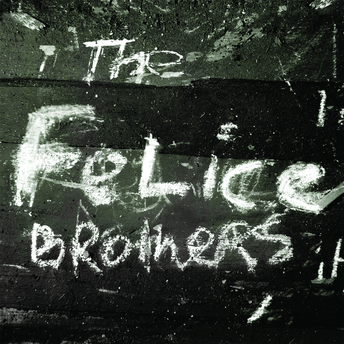
    “Frankie’s Gun” by The Felice Brothers

    Like spinning on a carousel, this song is a fun ride. The narrator is making a run to Chicago for some sort of contraband. It is a run that he has made so many times that “I think I know the bloody way by now.” Also like spinning on a carousel, you can predict exactly where this ride is going.

    Like all such endeavors, they have to be prepared for trouble. When he tells Frankie to check the glovebox and ignore the 30, is it $30 in cash, or might the 30 refer to a handgun?

    Every word is a warning: Don’t speed. No fender benders. Don’t draw attention. Frankie, keep your head down and your mouth shut.

    The loose, rollicking arrangement mirrors the trip—one wrong turn from disaster, and almost certainly doomed. The song sounds like it was recorded in a rest stop bathroom—and I mean that as a compliment. I can see our narrator, Frankie using a dirty towel to put pressure on his bullet wound, bleeding out as we hear the sirens closing in.

    The old-timey names (Frankie, Lucille) give this song a Bonnie & Clyde feel. Frankie and the narrator are so deeply immersed in this life of thievery and violence that they are fish swimming in it.

    Their world feels small and brutal, like the diner scene in A History of Violence — men so steeped in blood that violence is their only language.

    In the end, our narrator meets his fate. You can only make so many of these runs to Chicago without some sort of bad luck catching up to you. Was it a store robbery gone wrong? A cop who caught them breaking a minor traffic law?

    In the end, it doesn’t matter. What we get from The Felice Brothers is a painting of a lifestyle out of Flannery O’Conner’s “A Good Man is Hard to Find.” All that is missing is the fawning, superficial faith of a witness who “would have been a good woman, if it had been somebody there to shoot her every minute of her life.”

    The Felice Brothers don’t moralize. They just turn on the tape recorder and let the bloodstains tell the story.

  • Song of the Day #1

    Wilco – Spiders (Kidsmoke)

    Screenshot

    Wilco Live – Live at Chicago Theatre, Chicago, IL December 19, 2019

    There are a lot of forums and blog spaces dedicated to the what “Spiders” is about. My favorite response is, “It’s about 10 minutes long.”

    “Spiders (Kidsmoke)” is hypnotic. The rhythm and noise the band makes out of this riff are intoxicating live. I have seen Wilco many times, and I always look forward to this song being played.

    I loved that it was included in The Bear (Season 2 Episode 7). Even better … all ten minutes of the song were played! Given the chaos of the kitchen, it was not surprising to hear this song on that show.

    And that is what it is about for me.

    The band sounds like they have a unifying rhythm but they are teetering on the edge of being out of control. The chaotic noise erupts into a unified instrumental chorus—and from there, they drive it home with ferocity.

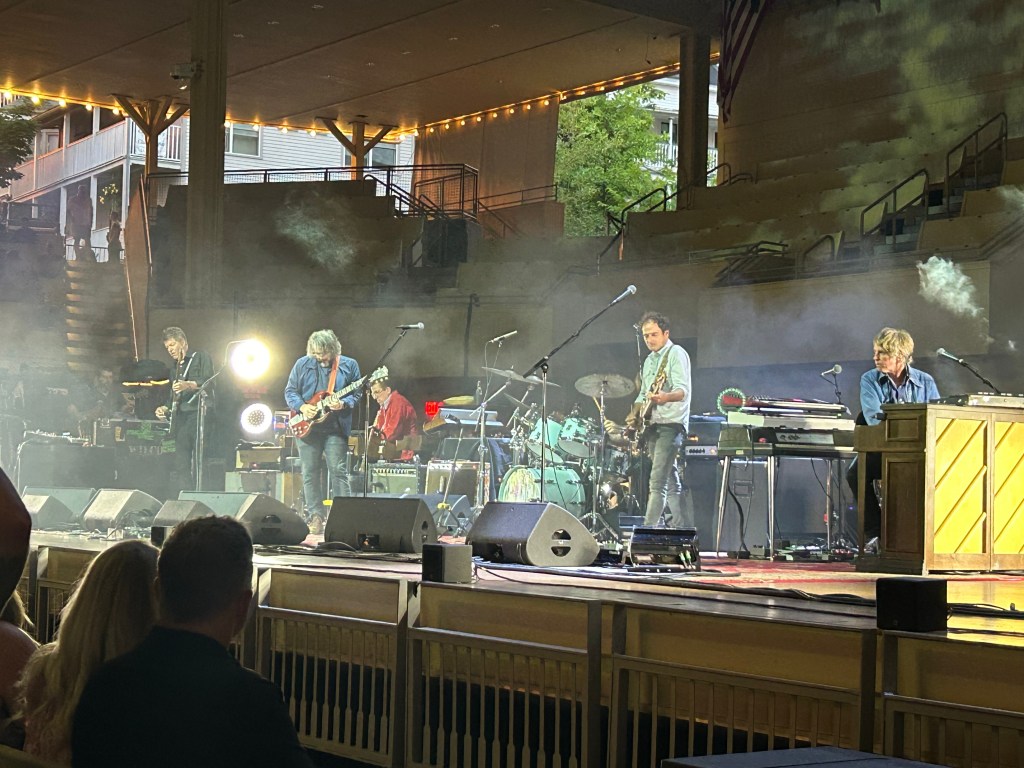
    My photo from seeing Wilco in Chautauqua NY on July 5, 2024

    Jeff Tweedy has talked about using the Word Ladder method for writing lyrics. I suspect he secretly enjoys watching people try to decode what was never meant to be solved. “Spiders are getting along” might not mean much — but man, it feels right when the room is shaking.

    The fun here is hearing and seeing the band erupt into the defining rhythmic instrumental chorus of the song. This is a guitar-driven song, despite the hypnotic keyboard rhythm that drones on and on under all the noise. And the live version features an ascending, furious guitar build up worthy of “A Day in the Life.”

    It’s the sound of something about to fall apart—and then pulling itself together just in time. I guess I don’t care what it’s about. I am here for the guitar worship.

  • Hello, World!

    They say you only get one chance to make a first impression …

    I started this blog because it has become increasingly apparent to me, as I get older, that my thoughts and interests are random and scattered. I had a notion that trying to organize them, even in some sort of haphazard fashion, might allow me to think about them in a more ordered, structured way.

    I am nervous and afraid as I begin, because it seems that the only way to do this is to do it honestly. I do not feel that any soul-searching is imminent this morning, but I am sure that there will be posts about the things I am passionate about at some point … my kids and after them in no particular order — Wilco, cooking, golf, Allie, The Shawshank Redemption, The Count of Monte Cristo, Leonard Cohen, etc.

    Allie

    I am determined to use this space to try to make connections between these random things, even though my interest in them seems to be the only connection. In this space, I am only interested in politics that are optimistic and help people. I am only interested in religion as an admiration of true faith and acceptance, but also an investigation and acknowledgement of how little we know. If you are interested in politics and/or religion, there are a million blogs and podcasts about those things available. In the immortal words of Melvin Udall, “sell crazy someplace else … we’re all stocked up here.”

    The only way to begin is to jump right in.


    1. Cavs v Pacers
    2. What I am Eating
    3. Before the Show: How Wilco (and Jerry Douglas) Make Me Think About Mastery

    Cavs v Pacers

    I found Matthew Syed’s The Greatest on a list of books that were featured in Ted Lasso.

    I have been pretty serious about trying to play better golf. Not serious enough to practice in any meaningful way … but I am playing two or three times a week, and I would like to play better and more consistently. The area I have the least confidence in is my short game, and my problems in that area feel 99% mental. So … back to my Kindle library …

    As I was reading Syed, I was watching the Cavs lose Game 5 of the second round of the NBA Playoffs to the Pacers. The Cavs, after a brilliant regular season and a dominant opening round series against the Miami Heat, seemed overwhelmed, confused, and even resigned to the inevitability that the Pacers would win.

    How could this happen? The Cavs have an All-NBA First Team player in Donovan Mitchell. The reigning DPOY in Evan Mobley. Their top four players are the envy of the league, and the bench is capable and deep.

    What happened?

    This excerpt jumped off the page:

    The Pacers had several significant runs in the series, each of which seemed to rip the heart out of the Cavaliers’ collective chest.

    In Game 1, all five Pacers starters scored in double figures. The Cavs looked rusty and ineffective as the Pacers went on key runs in the second half.

    The Pacers’ late game surge in Game 2, culminating with Haliburton’s dagger trey, recalled Reggie Miller’s legendary 8 points in 9 seconds.

    The Pacers’ 19-2 run to close the first half of Game 4 put them up 41 at halftime. Game over.

    The Cavs showed a little heart in Game 5, but it ended up being a death rattle as the Pacers went on runs of 17-2 and 24-5 in the second half. Even when the Cavs drew within three points at 106-103, the Pacers responded with an 8-2 run that put the final nail in the coffin.

    Sure, injuries are a big part of the story. But the ability of the Pacers to score in bunches, to execute “a small number of selective strikes,” sapped the will and resistance from a team that entered the playoffs as the best team in the Eastern Conference.


    What I am Eating

    I need to lose weight.

    I keep telling myself that it will never be easier than it is right now, but neither that nor my imminent knee replacement(s) have motivated me enough to actually try to shed pounds.

    I did keto for about a week-and-a-half. I was a vegetarian for about a week,

    My latest brainstorm is snacking. I am trying to eat 3-4 snacks a day of 100-150 calories, then eat one full meal. I am borrowing from my library of keto and vegetarian recipes to meal plan. My one maxim is to cut out sugar.

    Ironically, teaching my foods class has inspired me to be more creative in my food choices. I think I will be more successful if I can figure out what tastes good to me.

    A number of years ago, I tried intermittent fasting. The one part of it that really appealed to me was planning my first meal coming off a long fast. Looking forward to eating something I loved helped me stay the course. I am hoping that smaller tastes of flavors and textures that I love will inspire me in a similar way.

    Turns out that I love:

    • olives, especially the ones stuffed with blue cheese,
    • cheese — most notably, parmesan cheese crisps,
    • hard-boiled and scrambled eggs, and
    • chicken broth.

      It is landscaping season, so my activity level will be super-charged. That will help.

      My expectations are low, and I am trying incremental changes. I will keep you posted.


      Before the Show: How Wilco (and Jerry Douglas) Make Me Think About Mastery

      Chris Black’s latest article in GQ (May 15, 2025) really hits my sweet spot.

      GQ is one of my favorite magazines for culture updates.

      Waxahatchee was my favorite discovery of 2024 and dominated my Spotify Wrapped.

      And Wilco … ah Wilco …

      Wilco in Chautauqua NY on July 5, 2024 (my picture)

      I enjoyed the anecdotes and painful details about travelling and sleeping on the bus. But the revelation for me in this story was that “Jeff Tweedy & company have a full setup backstage, so that every night they can play before they actually play.”

      I dug deeper and found a Tweedy interview with Paste where the artist says that the pre-show practice sessions are “just the way we work.”

      I think about things like this often. Here is Wilco, with a combined professional music history of 220+ years, practicing before every show.

      I was a musician in high school, but my aspirations never amounted to anything more than pipedreams.

      I teach high school. I have over 20 years of coaching experience at the middle school and high school levels. I have heard countless student-athletes exclaim how much they love their sport and how much they would love to continue to play at the next level. But not once have I seen those would-be college or professional athletes dedicate themselves to the fundamentals, personal fitness, or craft in a way that would make those dreams a reality.

      I myself have wished that I could get on stage or write a book or become a better golfer. But I don’t do what it takes to actualize those dreams.

      I teach at LaBrae High School, and one of our alumni happens to be the best dobro guitar player in the world, Jerry Douglas. A former colleague at LaBrae went to school with Mr. Douglas and told me a story.

      This person was a pretty good high school athlete, and as a teenager, was running down the street to whatever baseball or basketball game that was scheduled for that day. He ran past Jerry Douglas’ house, and Mr. Douglas was on the front porch practicing his guitar. He yelled, “Jerry, come play ball with us.”

      He said that Mr. Douglas replied that he couldn’t because he had scales to practice. My then-teenage colleague yelled back, “Aw c’mon … you’re never going anywhere with that guitar.”

      Little did he know.

      The idea that mastery takes endless practice and dedication is hardly a new one (see Malcolm Gladwell’s Outliers and his 10,000 hour theory).

      But I love seeing it illustrated in a way that makes me believe that Jeff Tweedy, Nels Cline, John Stirratt, Glenn Kotche, Pat Sansone, and Mikael Jorgensen have a true passion for playing music together and devotion for getting it right.


      Keep strumming.
      keep wondering.
      Keep adding your voice
      to the good noise.
      - JHW